Implants and Oral Surgery
A missing or failing tooth affects more than appearance. It changes how you chew, how neighbouring teeth sit, and over time, the bone that supported it. Our in-house implant and oral surgery services are planned carefully to restore function and protect what remains.
Claremont Dental Rooms offers a range of oral surgery on-site, including extractions, dental implants, and the supporting procedures that often go alongside implant placement, such as gum surgery and bone grafting. Keeping these procedures in-house means your planning, imaging and treatment stay coordinated under one roof.
Every surgical case is planned using on-site 3D imaging (cone beam CT). This lets us assess bone volume, the position of nerves and sinuses, and the precise site for an implant before any treatment begins. Detailed planning is what separates a predictable result from a guess, particularly for implants, where position and angle determine both function and how natural the final tooth looks.
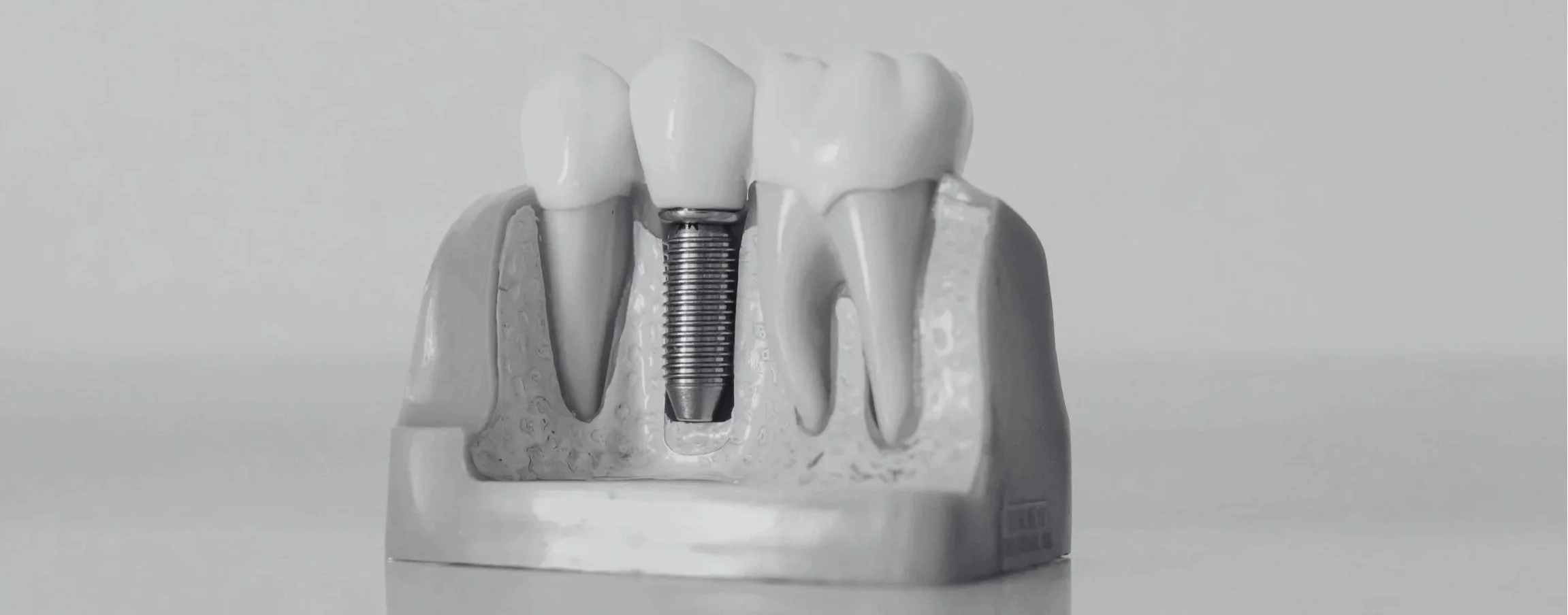
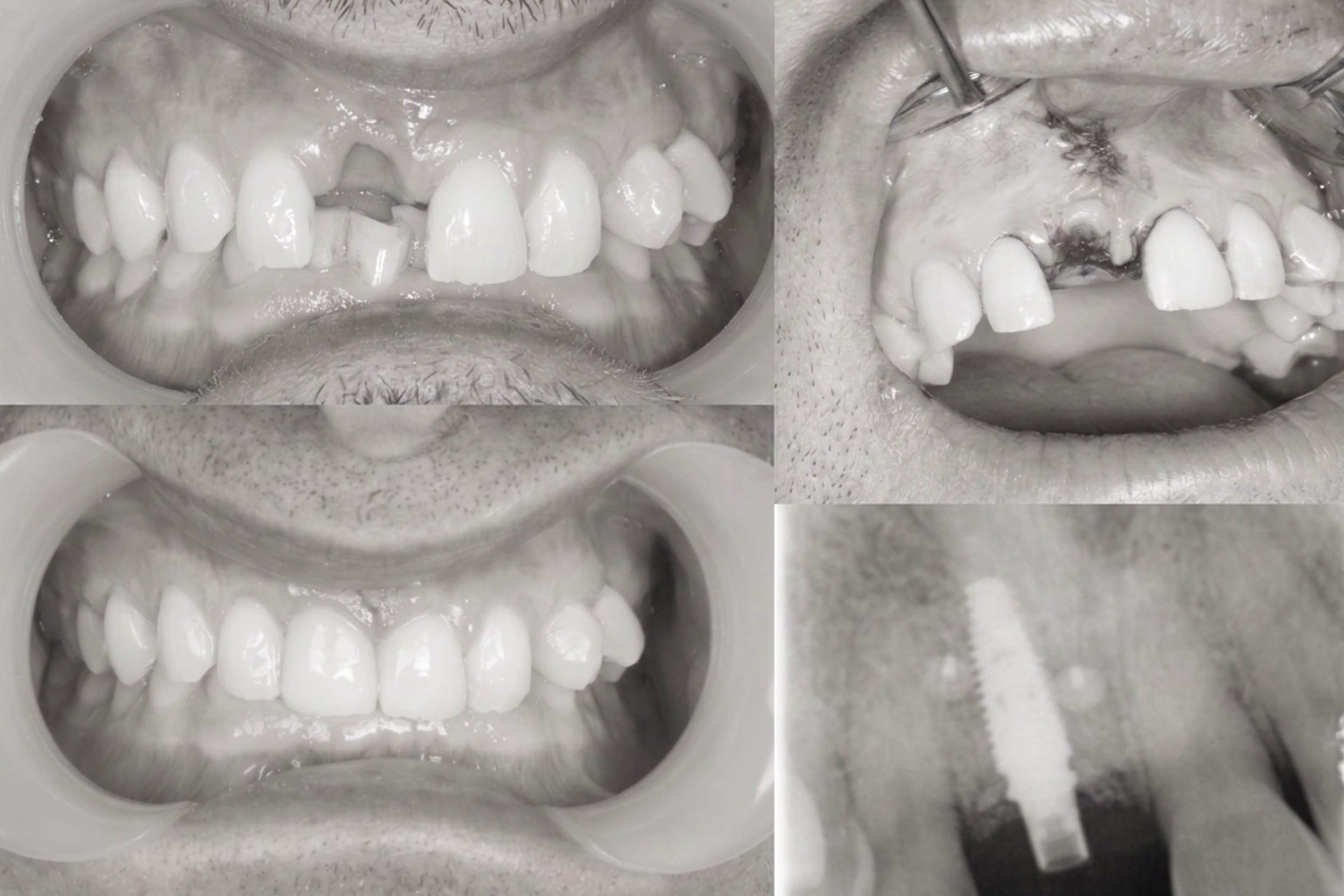
A dental implant is a small titanium or titanium-alloy post placed into the jawbone to replace the root of a missing tooth. Once the surrounding bone has healed and integrated with the implant, a crown is attached on top. Implants are a well-established option for replacing single teeth, multiple teeth, or for stabilising dentures, and they have the advantage of not relying on or altering the neighbouring teeth.
Where there is insufficient bone to support an implant, bone grafting can rebuild the site, and gum (soft tissue) procedures help create a stable, healthy foundation around the final restoration.
Our approach centres on careful planning, gentle technique and clear communication. Before any procedure, we will explain what is involved, what recovery looks like, and the realistic alternatives if surgery is not the right choice for you. An implant is not always the best answer. Sometimes a bridge, a denture, or simply monitoring the space is more appropriate, and we will say so.
Frequently Asked Questions
-
Most implant treatment takes several months from placement to the final crown. After the implant is placed, it needs time to integrate with the bone, typically around three to six months, before the crown is attached. The exact timeline depends on the site, your healing, and whether bone grafting is needed first. We will give you a realistic schedule at your consultation.
-
Implant placement is done under local anaesthetic, so you should not feel pain during the procedure. Afterwards, most people experience mild to moderate soreness for a few days, similar to an extraction, which is usually well managed with simple pain relief. We will go through what to expect during recovery beforehand.
-
The cost varies depending on whether additional procedures such as bone grafting are required, and on the materials used. Because every case is different, the only accurate figure is one based on your own 3D imaging and treatment plan. We provide a written, itemised quote before you commit to anything.
-
An implant replaces a missing tooth with a post in the jawbone and does not involve the neighbouring teeth. A bridge replaces a missing tooth by placing crowns on the teeth either side of the gap. An implant is often the more conservative long-term option because it preserves the adjacent teeth, while a bridge avoids surgery and can be faster. The best choice depends on your specific situation.
-
Most healthy adults with enough bone to support an implant are suitable candidates. Factors such as smoking, uncontrolled diabetes, gum disease and certain medications can affect healing and success, and low bone volume may require grafting first. Our 3D imaging and assessment determine suitability before any treatment is planned.
-
Implants are designed to be a long-term solution and many last for decades, but they are not guaranteed for life. Their longevity depends heavily on oral hygiene, gum health, not smoking, and regular maintenance visits. The crown on top may need replacement over time even when the implant itself remains sound.



We accept all health insurance companies including BUPA, HCF, HIF, Police Health, Navy Health, Teachers Health, Police Health. We also accept government payments: Department of Veterans Affairs, Child Dental Benefit Scheme and Metropolitan Patients Dental Subsidy Scheme.