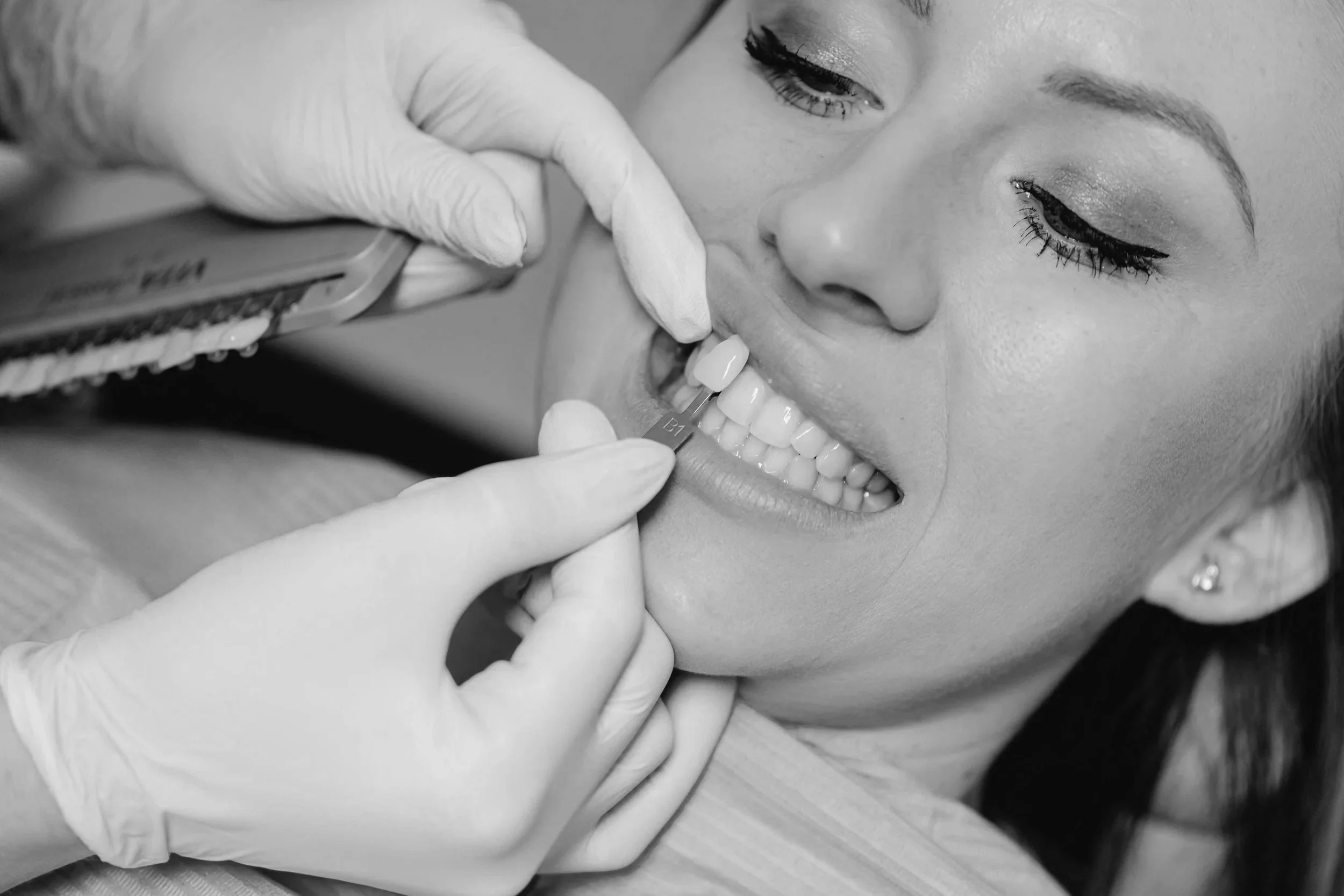
Veneers & Cosmetic Bonding
Teeth can be perfectly healthy yet still look worn, chipped, uneven or discoloured. Veneers and cosmetic bonding refine the colour, shape and proportion of teeth, often without replacing otherwise sound tooth structure.
A veneer is a thin layer placed over the front surface of a tooth to improve its appearance. At Claremont Dental Rooms we offer two main approaches, composite veneers and porcelain veneers. The right choice depends on what you want to change, your timeline and your budget, and we plan both around facial proportions, lip movement and bite function rather than tooth shade alone.
Composite veneers, also called cosmetic bonding, are hand-sculpted directly onto the tooth, usually in a single visit. The approach is more conservative, faster and more affordable, and it works well for minor chips, small reshaping, closing a small gap, or refining one or two teeth. Composite is also easier to repair if it chips later. The trade-offs are that it is more prone to staining and wear over time, and may need maintenance or replacement sooner than porcelain.
Porcelain veneers are custom-made ceramics bonded to the front of the tooth, typically across two appointments. They involve more tooth preparation but offer greater strength, better colour stability and longer-lasting results. Porcelain is usually the better option when several teeth need consistent colour and form.
The most important point is restraint. Healthy teeth do not always need veneers. Where minor reshaping, whitening, or bonding a single tooth would give a good result, we will recommend that rather than preparing multiple teeth unnecessarily. Once tooth structure is removed for porcelain veneers, that step cannot be undone, so it deserves a careful conversation first.
We will talk you through which option suits your situation, what each involves, and what to realistically expect from the result.
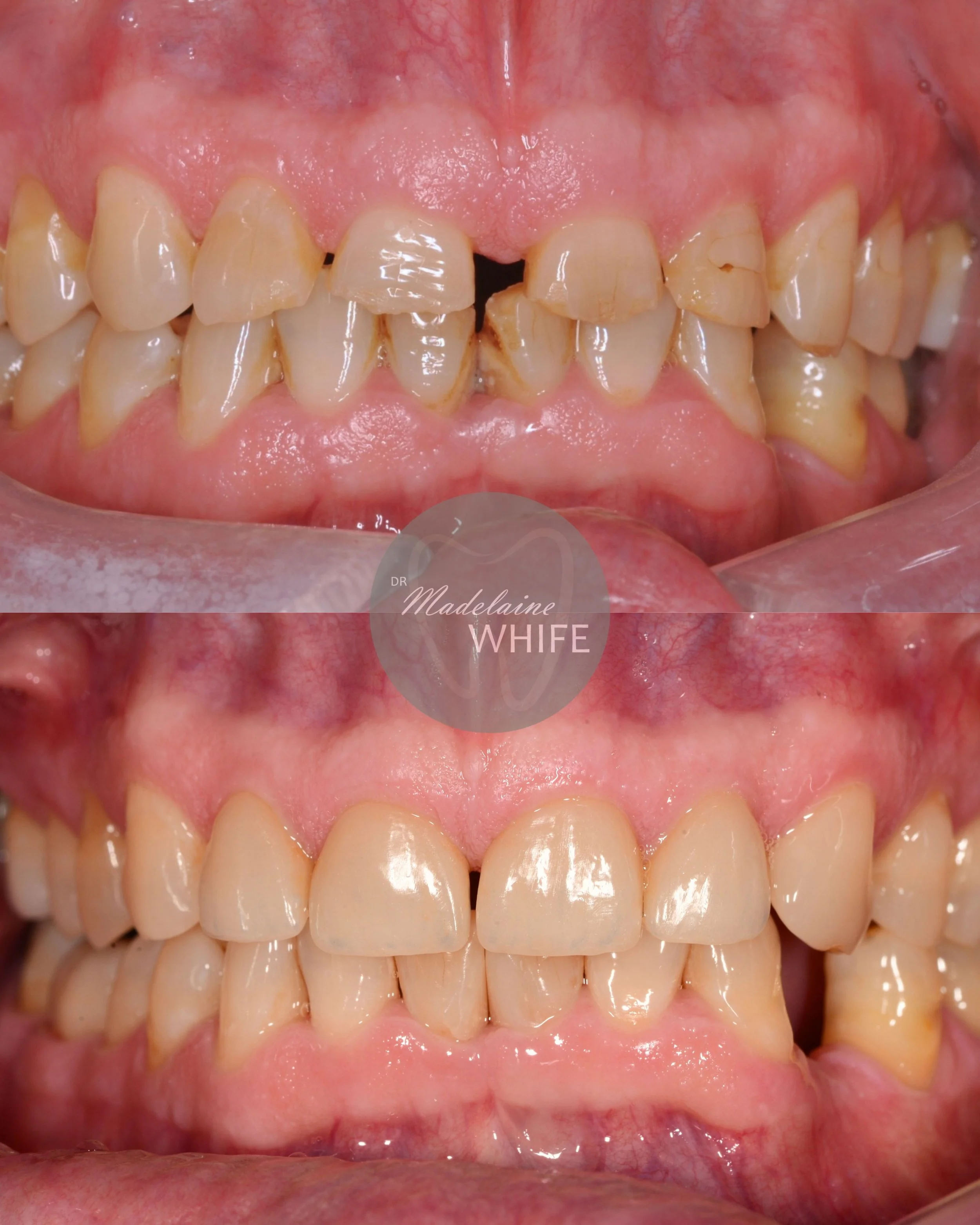
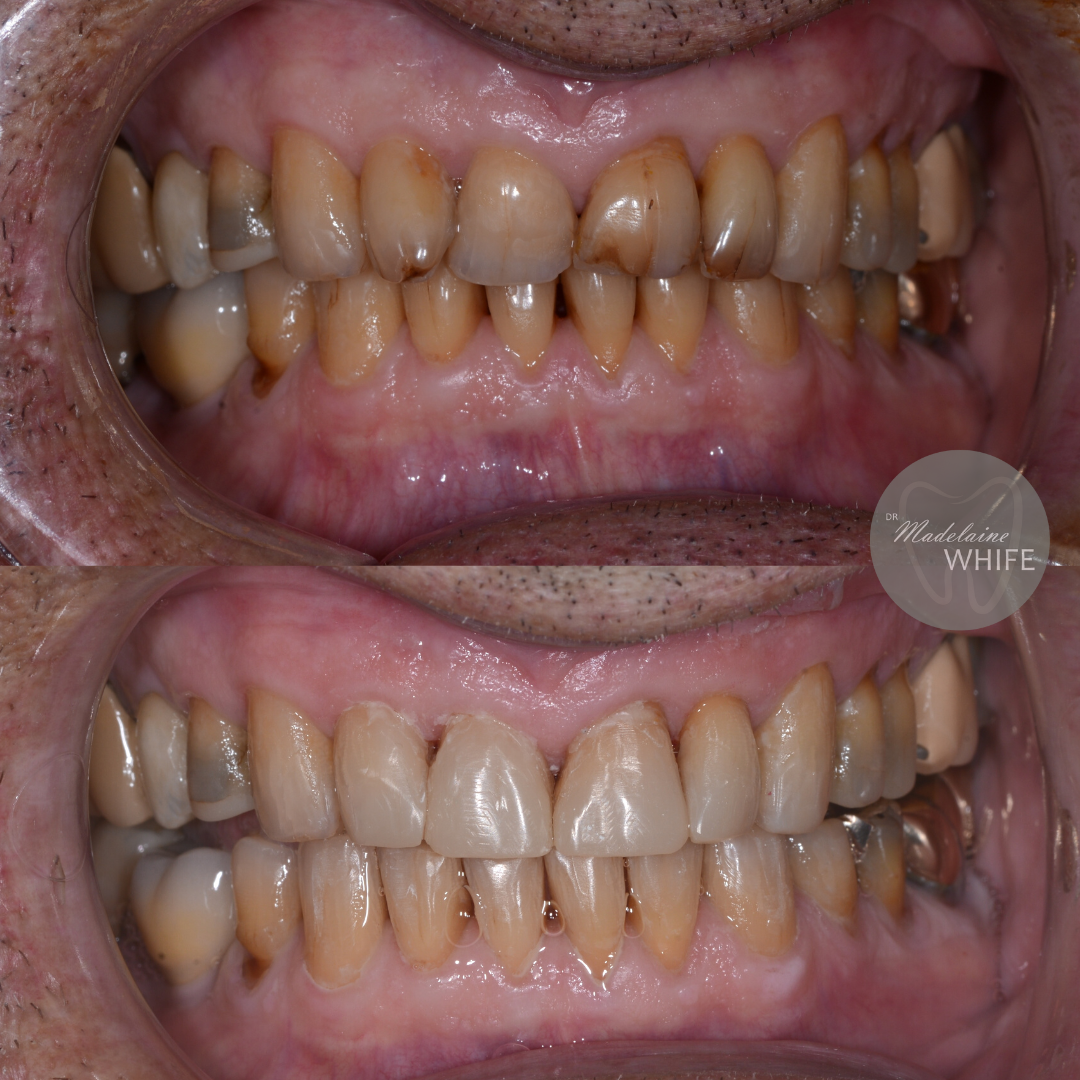
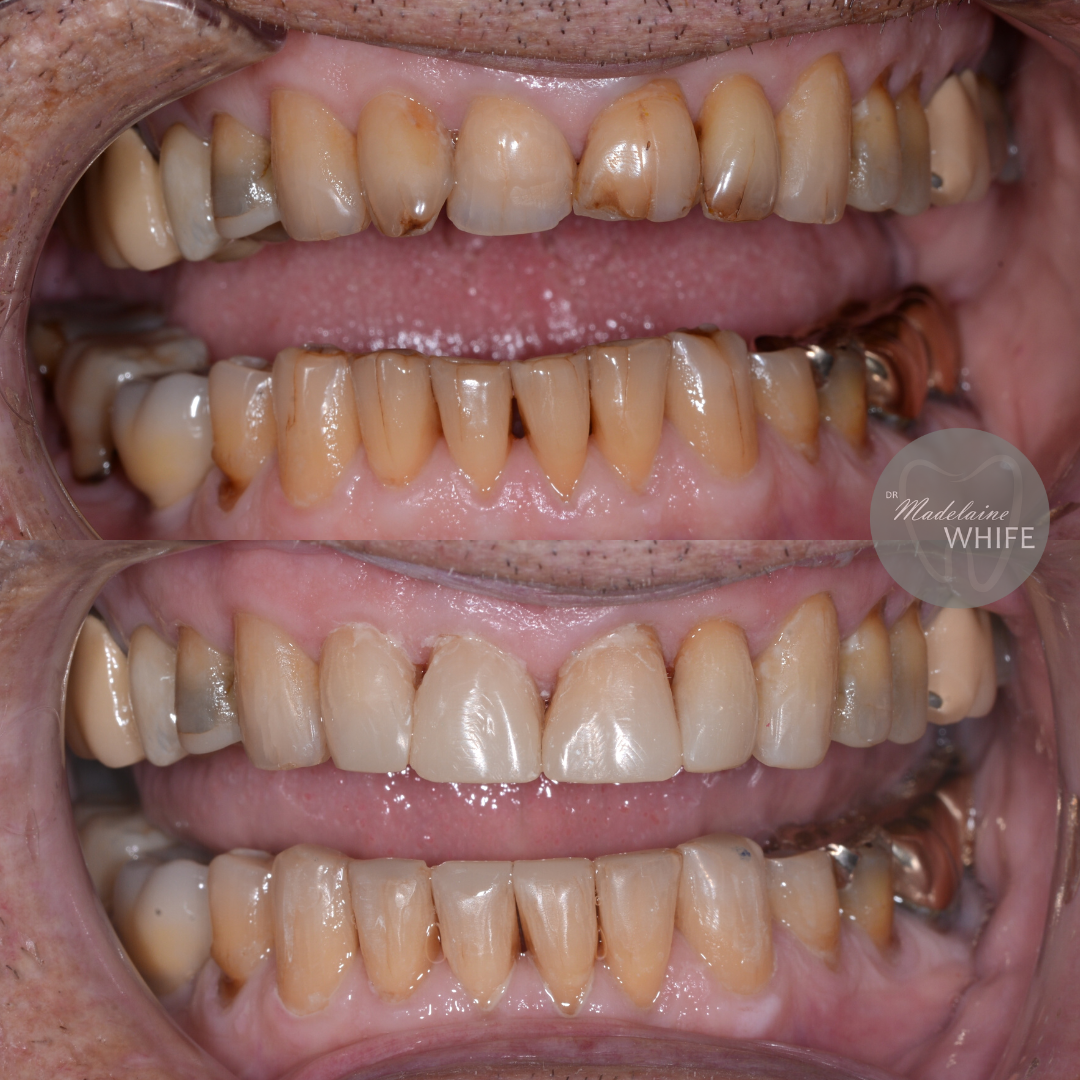
Four ceramics on upper incisors. Top: Before. Bottom: After.
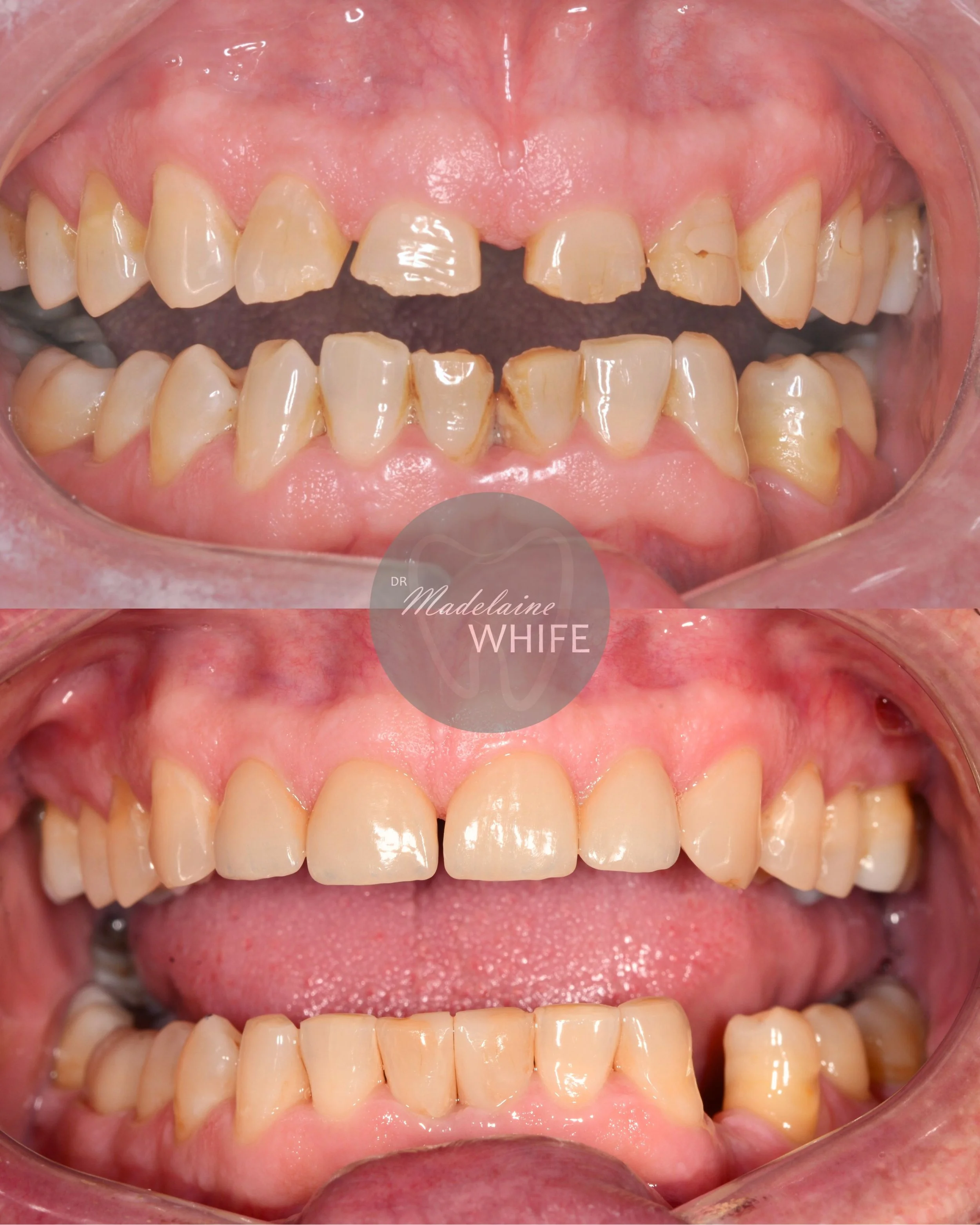
Four ceramics on upper incisors. Top: Before. Bottom: After.
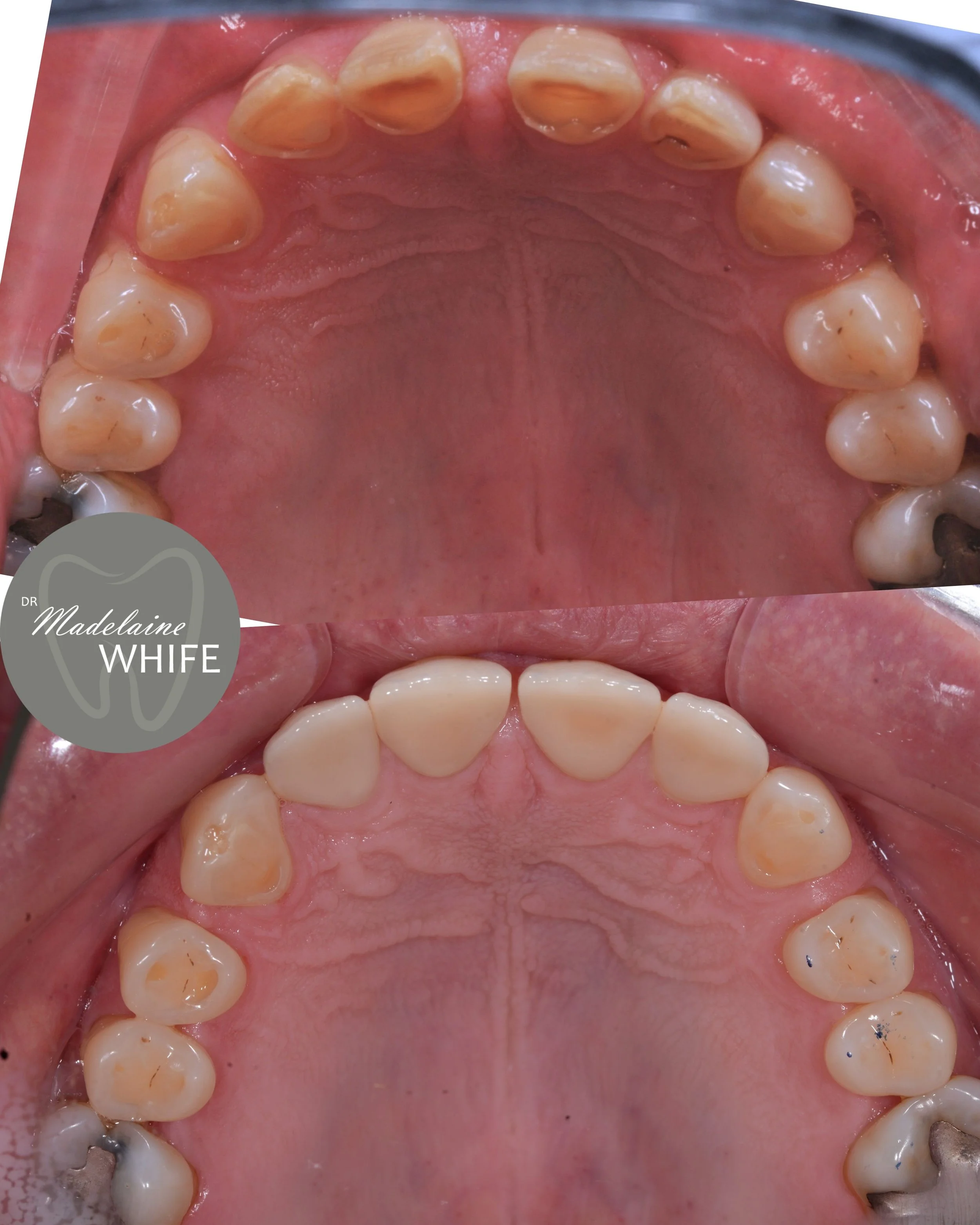
Four ceramics on upper incisors. Top: Before. Bottom: After.
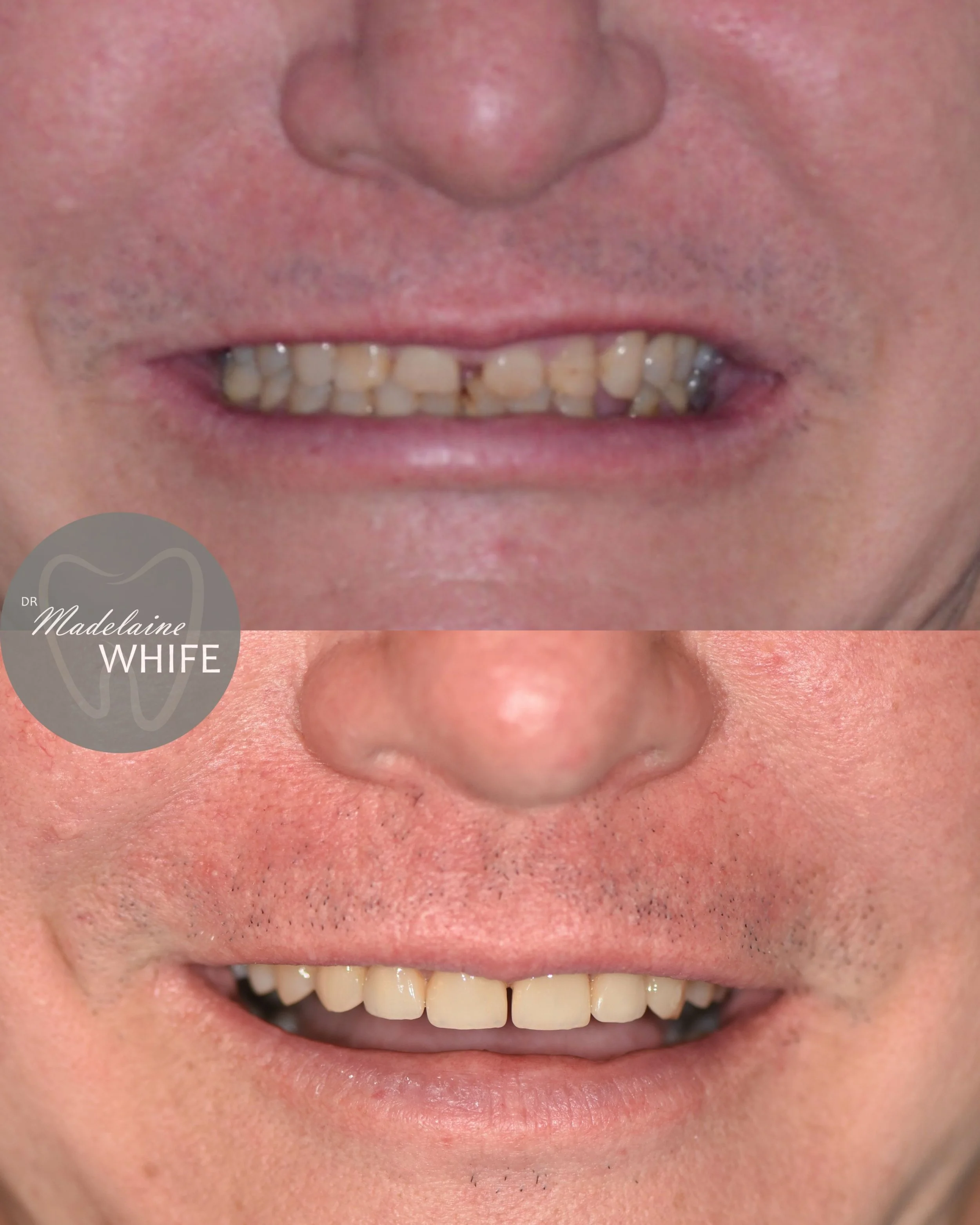
Four ceramics on upper incisors. Top: Before. Bottom: After.
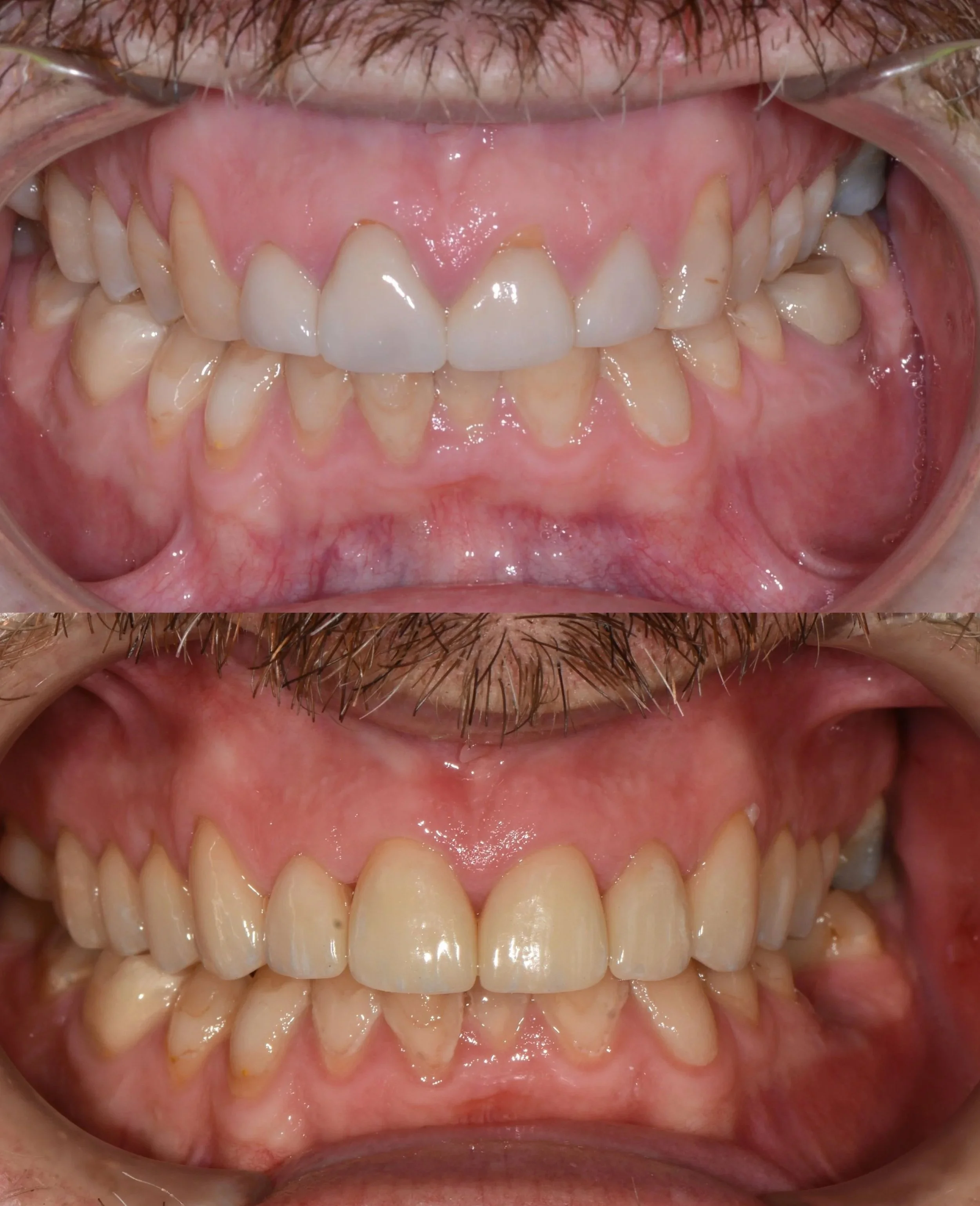
Ceramic crowns and veneers. Top: Before. Bottom: After.
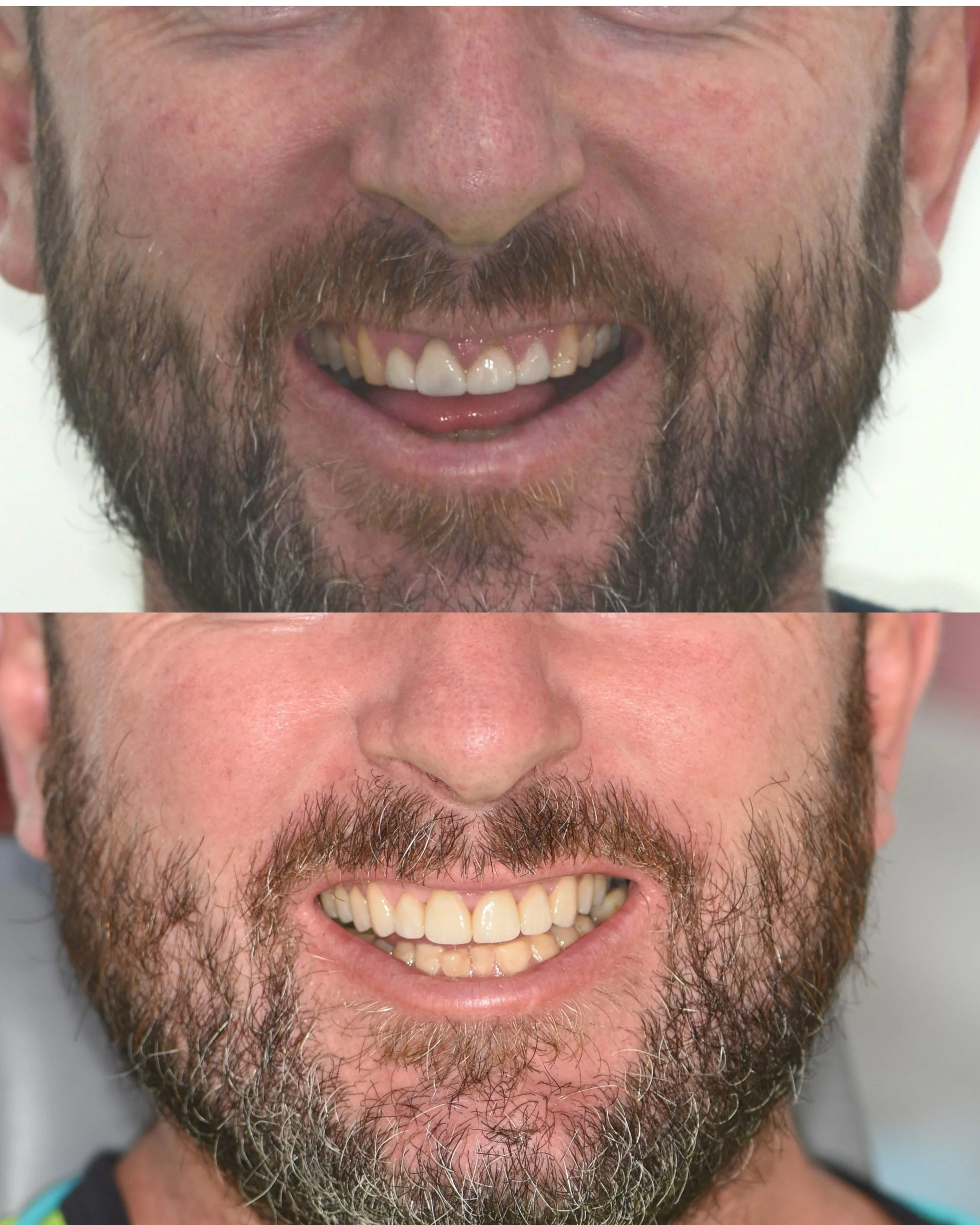
Ceramic crowns and veneers. Top: Before. Bottom: After.
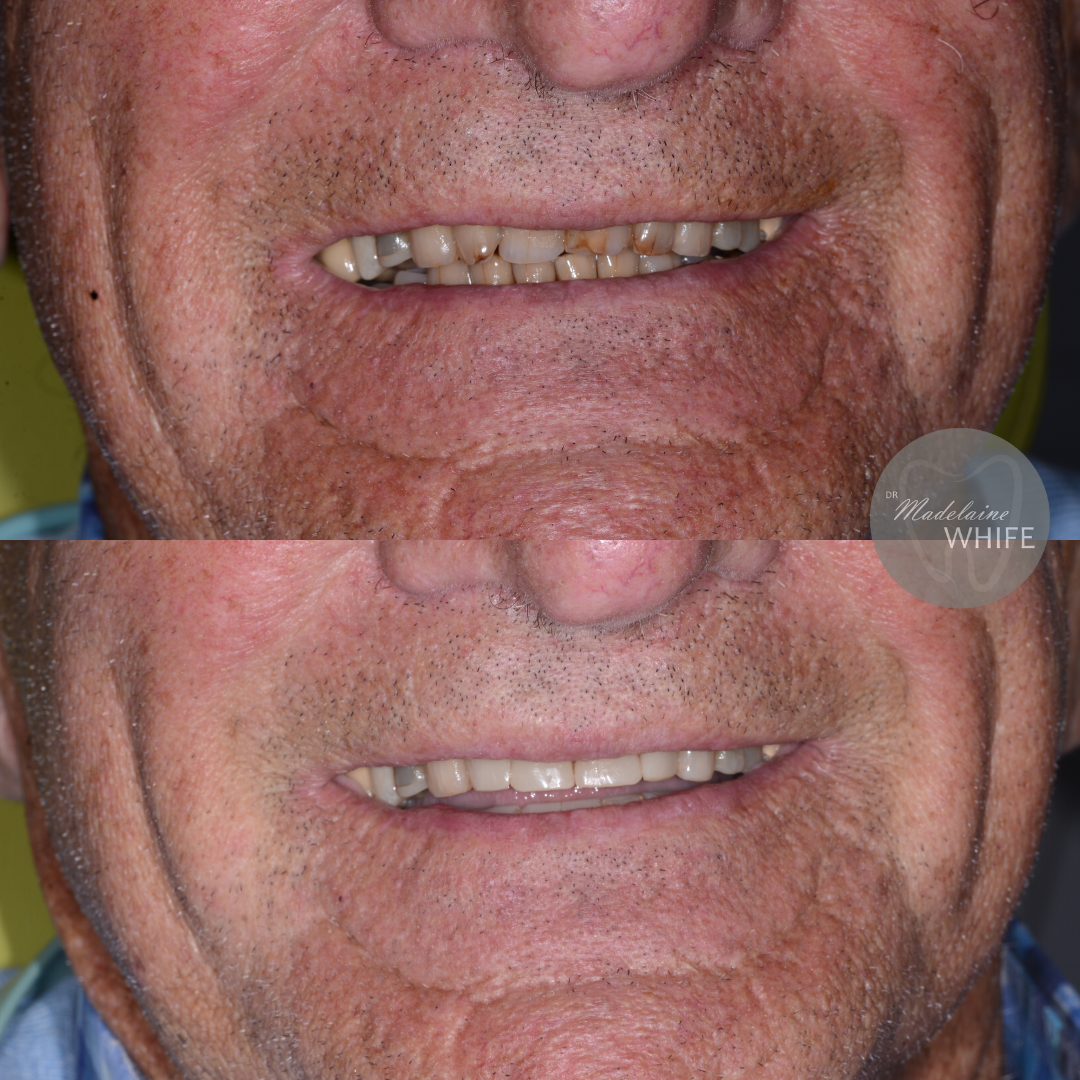
Composite bonding. Top: Before. Bottom: After.
Composite bonding. Top: Before. Bottom: After.
Composite bonding. Top: Before. Bottom: After.
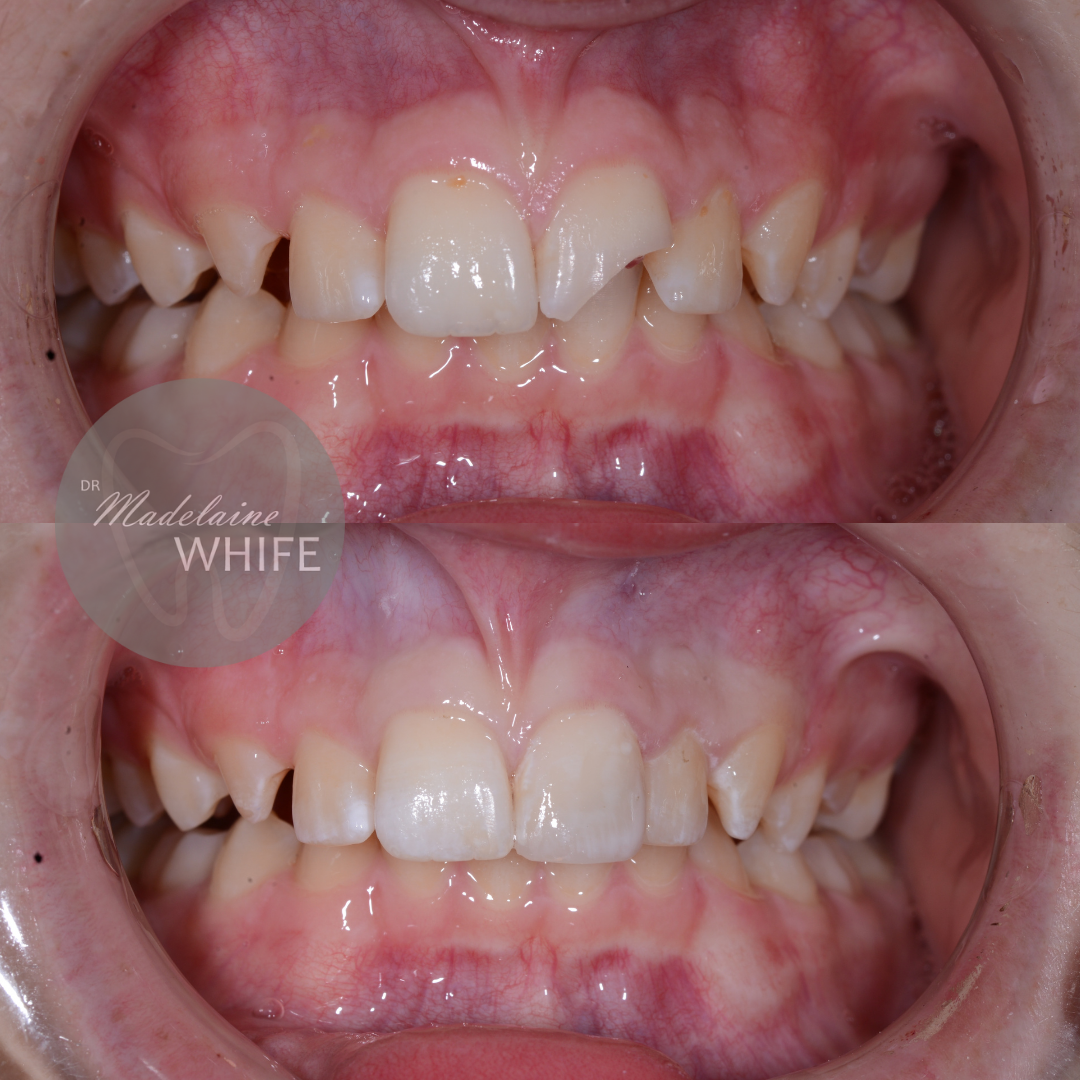
Composite bonding. Top: Before. Bottom: After.
Frequently Asked Questions
-
Composite veneers are built up directly on the tooth in one visit using a tooth-coloured resin. Porcelain veneers are custom-made ceramic shells bonded over two visits. Composite is more conservative, faster and lower cost but stains and wears more over time. Porcelain involves more preparation but is stronger, more stain-resistant and longer-lasting.
-
With good care, composite veneers commonly last around five to seven years before needing maintenance or replacement, while porcelain veneers often last ten years or more. Longevity depends on your bite, your habits such as grinding, and how well you look after them. No veneer is permanent, and all may eventually need replacing.
-
Composite bonding usually involves little or no removal of tooth structure and is largely reversible. Porcelain veneers typically require removing a thin layer of enamel, which does not grow back, so that step is irreversible. This is why we recommend the most conservative option that achieves your goal, and discuss it fully before proceeding.
-
The process is generally not painful. Composite bonding often needs no anaesthetic. Porcelain veneers may involve local anaesthetic during preparation, and some people notice mild temporary sensitivity afterwards. Most patients find the process comfortable.
-
Often, yes. If your teeth are healthy and well-aligned and your main concern is colour, professional whitening is a far more conservative starting point than veneers. Veneers are better suited to changing shape, proportion or repairing chips and wear. We will tell you honestly if whitening alone would meet your goal.
-
This depends on what you want to change and how many teeth show when you smile and talk. Some people need only one or two; others choose to treat the teeth visible across the smile for a consistent look. We plan this around your facial proportions, not just the teeth themselves, and recommend the minimum that achieves a natural result.



We accept all health insurance companies including BUPA, HCF, HIF, Police Health, Navy Health, Teachers Health, Police Health. We also accept government payments: Department of Veterans Affairs, Child Dental Benefit Scheme and Metropolitan Patients Dental Subsidy Scheme.